Indoor air quality in bedrooms is crucial for healthy sleep and overall well-being. Carbon dioxide (CO₂) levels serve as a key indicator of ventilation efficiency, with concentrations above 1,000 ppm signaling inadequate air exchange. This article analyses real data from three different approaches to bedroom ventilation, where typically two people sleep, using CO₂ measurements from the ioSWIPE+ smart wall switch unit with integrated sensor mounted at 120 cm height.
Scenario 1: No mechanical ventilation
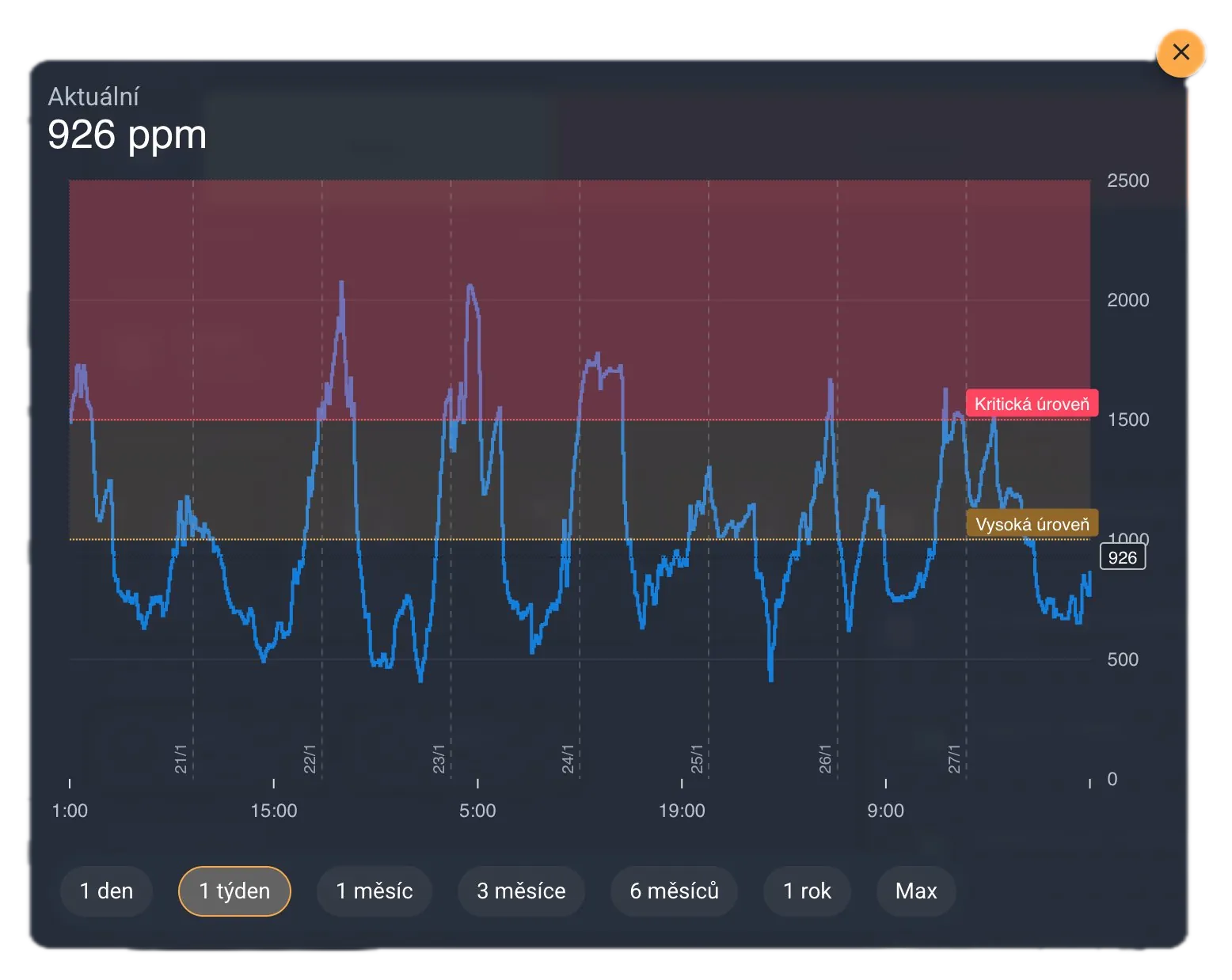
Avg CO₂: ~1,200 ppm
In a house equipped with the BARAQ smart home system but without any mechanical ventilation or heat recovery, CO₂ levels show significant variability throughout the day.
- Peak values: Regularly exceed 2,000 ppm
- Critical level: 1,500 ppm (frequently exceeded)
- Average value: ~1,200 ppm (above recommended threshold)
This scenario demonstrates complete reliance on natural ventilation through window opening. During sleep, when windows are typically closed, CO₂ accumulates rapidly and often reaches unhealthy concentrations.
Scenario 2: Smart heat recovery with whole-house averaging
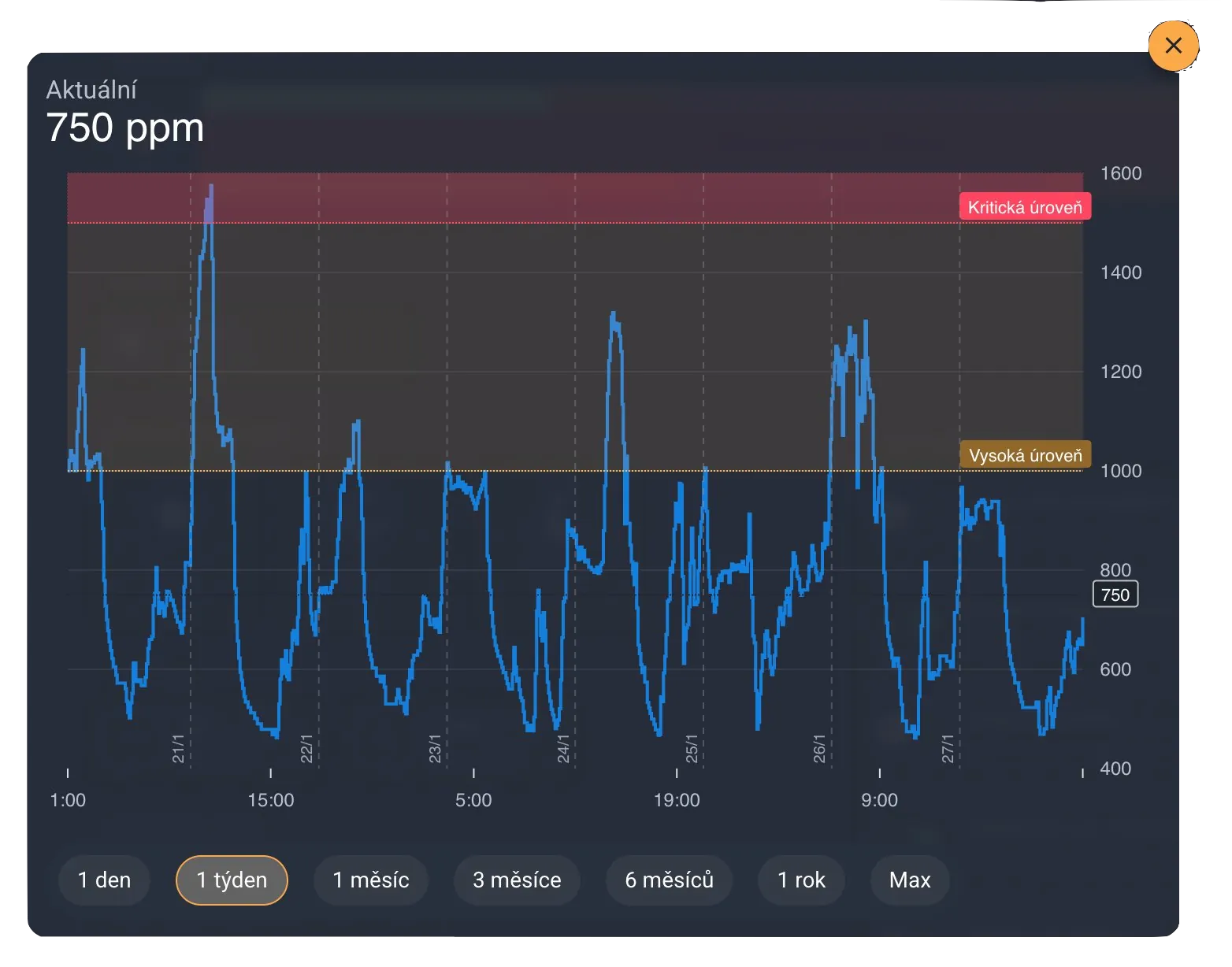
Avg CO₂: ~850 ppm
This house features an advanced heat recovery system with integrated CO₂ and humidity sensors along with the BARAQ smart home system. However, the smart ventilation rule is disabled and the system operates based on whole-house value averaging.
- Peak values: Up to 1,600 ppm at maximum occupancy
- Critical level: 1,500 ppm (occasionally exceeded)
- Typical range: 600–1,000 ppm for most of the day
While this system represents significant improvement, it suffers from a fundamental limitation: the heat recovery unit responds to average conditions throughout the house rather than addressing specific room needs.
Scenario 3: Basic heat recovery with smart control
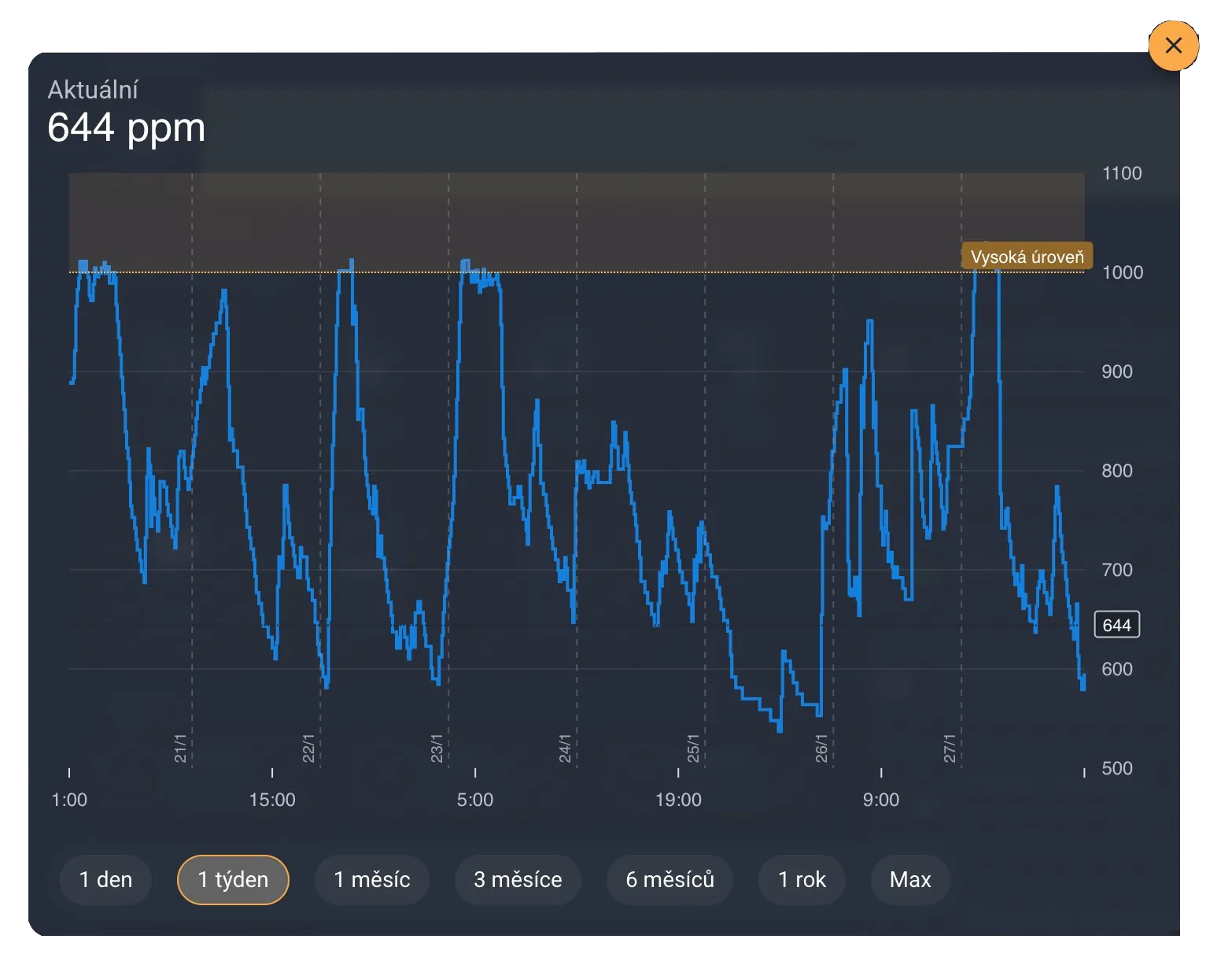
Avg CO₂: ~700 ppm ✓
This configuration uses a basic, affordable heat recovery system without built-in sensors. However, it’s enhanced by the BARAQ smart home system with an active smart ventilation rule that keeps bedroom CO₂ levels below 1,000 ppm.
- Peak values: Consistently below 1,000 ppm
- Critical level: 1,000 ppm (not exceeded during the measured period)
- Typical range: 600–850 ppm throughout the day
This approach delivers the best results despite using the most economical heat recovery hardware. The key differentiator is room-specific control logic implemented through the smart home system.
Comparison table
| System Type | Avg CO₂ | Peaks |
|---|---|---|
| No heat recovery | ~1,200 ppm | >2,000 ppm |
| Smart heat recovery (whole house) | ~850 ppm | ~1,600 ppm |
| Basic heat recovery + smart control | ~700 ppm | <1,000 ppm |
Key finding
The data reveals a counterintuitive conclusion: expensive equipment doesn’t guarantee optimal results. The most effective system combines economical heat recovery hardware with intelligent room-level control.
Health impacts
Research consistently shows that elevated CO₂ levels during sleep impair cognitive function, decision-making ability, and sleep quality. Chronic exposure to CO₂ concentrations above 1,000 ppm correlates with symptoms including:
- Morning headaches
- Difficulty concentrating
- Reduced productivity
Keeping bedroom CO₂ below this threshold is one of the preconditions for good sleep.
About the data
All measurements presented in this article were collected using ioSWIPE+ smart wall touch switch units equipped with integrated CO₂ sensors. Sensors were installed at 120 cm height from the floor in bedrooms for two adults.
The BARAQ smart home system provided the platform for implementing room-specific ventilation rules, demonstrating the practical application of combining basic infrastructure with intelligent automation to achieve excellent air quality results.